
The Pennsylvania Backyard Sauna Guide
If you’re early in the process, this page will save you time and confusion. It’s written for homeowners — not contractors — so you can understand your options before talking to any installer.
No obligation • No spam • Local Pennsylvania focus
Why talk to a guide before an installer?
Installers can only quote what you ask for — and many companies primarily sell what they stock. If you reach out before you’ve decided on basics like size, heater type, and placement, you’ll get apples-to-oranges quotes and a lot of “it depends.”
- Saunas involve constraints: power, access, base/foundation, and local rules.
- Most mistakes are preventable: a little clarity up front avoids surprise costs later.
- Our goal: help you feel confident before spending $10k–$20k.
Sauna options (the decisions that drive cost & feasibility)
These are the big levers. You don’t need to “pick perfectly” today — but understanding the tradeoffs makes every next step easier.
Barrel vs cabin
- Barrel: heats efficiently outdoors, simple footprint, classic look. Layout is less flexible.
- Cabin: more interior space and bench/layout options; can feel roomier for groups; may require more planning.
Good rule: barrel = efficient and simple; cabin = flexible and spacious.
2–4 person vs 6–8 person
- Smaller units are easier to place and often simpler to power.
- Larger units require more footprint, heavier bases, and often stronger electrical service.
If you’re buying for daily use: 2–4 is common. If you want hosting: plan for more space + more power.
Electric vs wood-fired
- Electric: convenient, consistent. Larger units often need dedicated circuits and professional electrical work.
- Wood-fired: avoids electrical upgrades but requires proper clearances, ventilation planning, and safe operation.
Not sure yet? The Sauna Fit Check helps clarify feasibility based on your power + placement.
Indoor vs outdoor
- Outdoor: most common; flexible; typically simpler for moisture management.
- Indoor: doable, but plan ventilation/moisture and access carefully.
Real installed costs (what most homeowners should expect)
Installed cost varies based on sauna type/size, electrical work, and site prep. In PA, a reasonable starting expectation is:
- Entry installs: $4,000–$6,000 (often smaller units / minimal site work)
- Most common installs: $7,000–$10,000
- Premium/custom installs: $12,000+
Buying a kit without planning electrical/site prep often leads to surprise costs later.
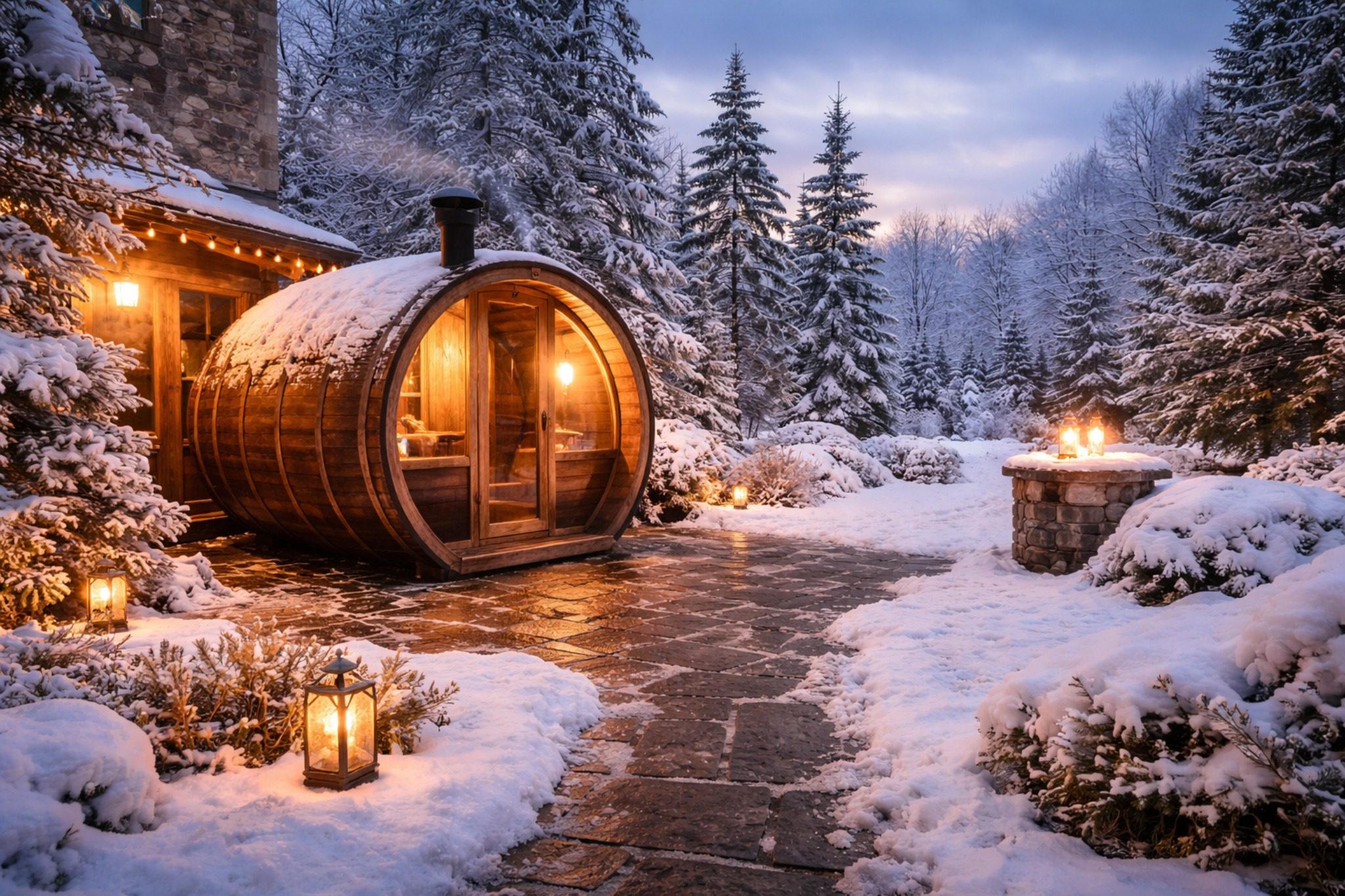
What’s required to install a backyard sauna?
- Flat surface (concrete pad, pavers, or suitable deck)
- Electrical connection (requirements vary by sauna type)
- Clearance/access to move the unit into place
- HOA/zoning considerations (if applicable)
Common homeowner mistakes
- Choosing a sauna type that doesn’t match how they’ll use it
- Underestimating electrical work and access requirements
- Not considering HOA rules until after purchase
- Skipping a quick consult and paying for it later
5 questions installers wish homeowners asked first
If you ask these up front, you’ll avoid 80% of “surprise cost” situations.
- What’s the realistic all-in range for my yard? (kit + pad/site work + electrical)
- Where would you place it — and why? (access, drainage, safety clearances)
- What base do I need here? (gravel, pavers, slab) and what prep is required?
- What power plan makes sense? (panel capacity, distance, trenching, permits)
- What’s the #1 thing that could make this more expensive? (so you can plan for it)